Welcome readers. It’s August already. 2026 kind of feels like a time warp because on paper it’s been 7 months, but we’ve seen what used to be multiple years’ worth of change in that time. It’s like we’re on Miller’s planet from the movie Interstellar, where 1 hour on the planet is 7 years on Earth. Technology from last year feels old. From three years ago feels ancient. Three years ago today, ChatGPT couldn’t tell you who won last night’s ball game and nobody had even heard of Anthropic.

It’s like AI is on Miller’s planet but our brains still run on Earth time. Our brains adapt on the timescale of habits, careers, and generations – not model release cycles. When something running on Earth time gets strapped to something running on Miller’s planet time, the mismatch does something to our brains.
In this edition, I’m going to explore some of the cognitive impacts of heavy AI usage that we all need to be aware of. The interesting bit is that most of the impacts aren’t new and have been named and studied in the psychology literature. These are well-documented human vulnerabilities that AI has simply cranked up in both speed and dosage. So the good news is that we have a manual for how to overcome some of these things, but we must do so at an unprecedented speed. Let’s dive in with a few examples.
It’s 6:47pm on any weekday. Dinner is at 7pm sharp. I’m furiously typing and reading and clicking, desperately trying to get something in under the wire. What could be so important? And why can’t it wait until morning? What I’m trying to accomplish is to gather and provide all of the information necessary for my team of AI agents to have what they need in order to be able to go on a long overnight run. It’s a beautiful dance where the agents will create a piece of work, hand it off back and forth to other specialized agents, spawn subagents, all the while dodging context window limits, avoiding tool call failures and timeouts.
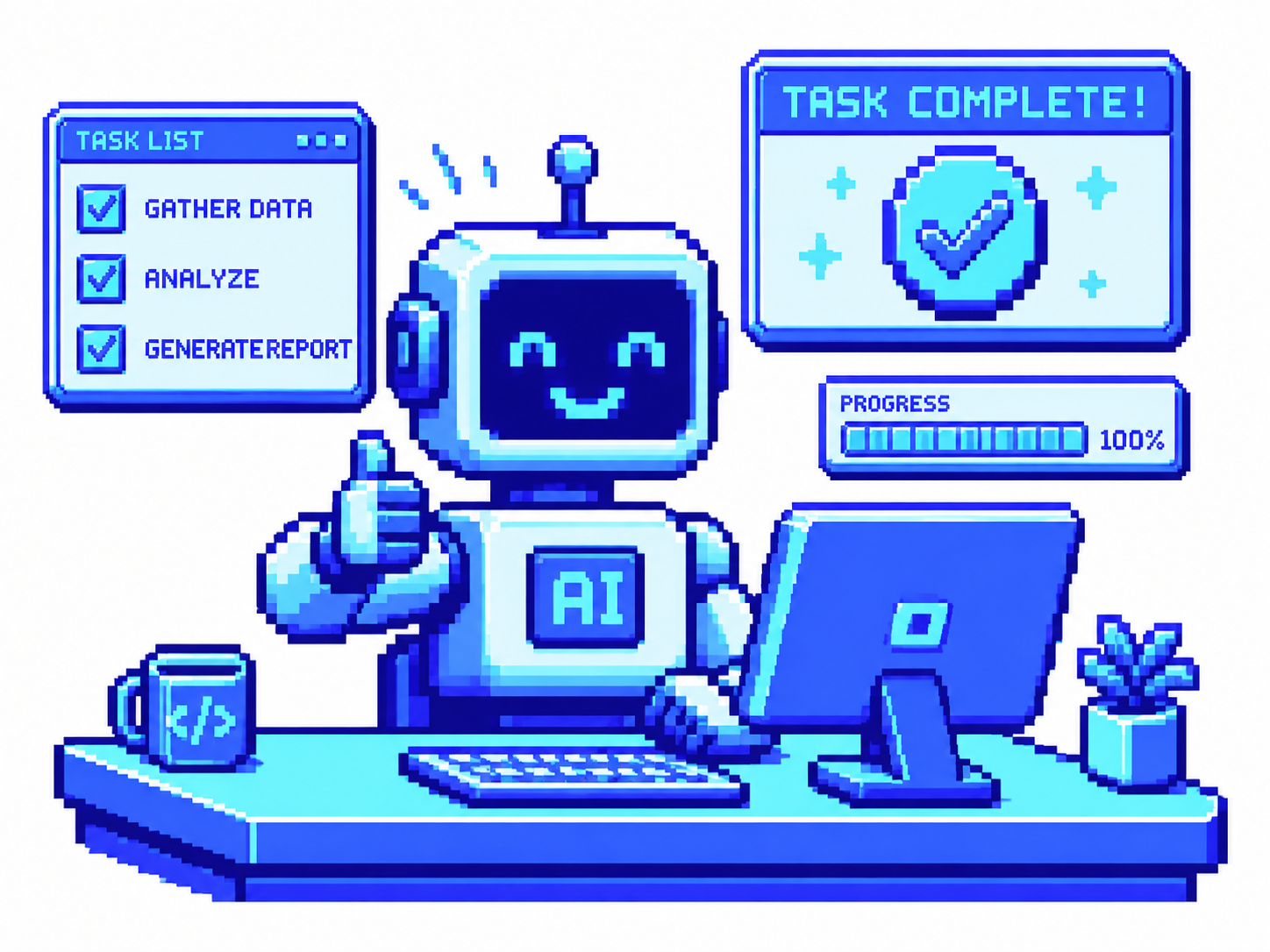
With any luck, I’ll wake up in the morning and the thing is done, validated and verified, green checkmarks across the board. It’s quite a dopamine hit. It feels like banking an extra half-day of productivity. But sometimes there are red X’s. It failed, perhaps with a fumbled handoff or a failed retry loop. Or sometimes I just didn’t manage to kick it off before dinner. And that’s disappointing. The reason it couldn’t wait the night before is if I didn’t start the run, then I’ll never get that time back. That opportunity to be productive is gone forever.
In psychology, this is actually a well-studied area. The term for it is “Productivity Guilt”, which was originally described as, “The uneasy sense that time saved through technology has to be justified, filled, or repaid.” This is just a new form of it. Phew! It’s not just me.
There are also elements of gambling in play here. I have previously likened it to playing a slot machine, but that’s not quite right. This is part skill and part luck. It’s more like playing poker. My wager is the time I take setting it up. The payout is the 5-7x return on productive time. Wins and losses feel real. In economics they call this Asymmetric Leverage. When a relatively small amount of time generates a massive output multiplier, the psychological impact becomes itself vastly magnified. I’m not a gambler and I’m grateful for that, because AI carries a lot of the same risks.
Very old condition, hooked up to a brand new multiplier.
They say that the main difference between introverts and extroverts is how they manage energy: introverts lose energy from being social and need quiet time alone to recharge, while extroverts gain energy from social interaction and feel drained by too much isolation. I’m an introvert. I love spending time with people and being social, but it is draining for me. In 2025, my wife’s first question when I walked in the door after work was not, “How was your day?”, but rather, “How many meetings did you have today?”. This was used as a proxy for how hard my day was. How tired I was from that day. 1-2 meetings and she might suggest an after-dinner walk or taking my son out on his bike. 3-5 was average and we would do our usual routine. 6-7 meant I was cooked and I could skip the dishes.
This year, it is the opposite. Nearly all I do each day is attend meetings and work with AI agents. So if I only had 1 or 2 meetings, that means I probably spent 6+ hours working with agents. Somehow that drains more energy. It’s almost like socializing on steroids in that I’m having 5 different conversations all at the same time. I would be interested to read a paper on how heavy AI usage impacts energy levels for extroverts versus introverts.
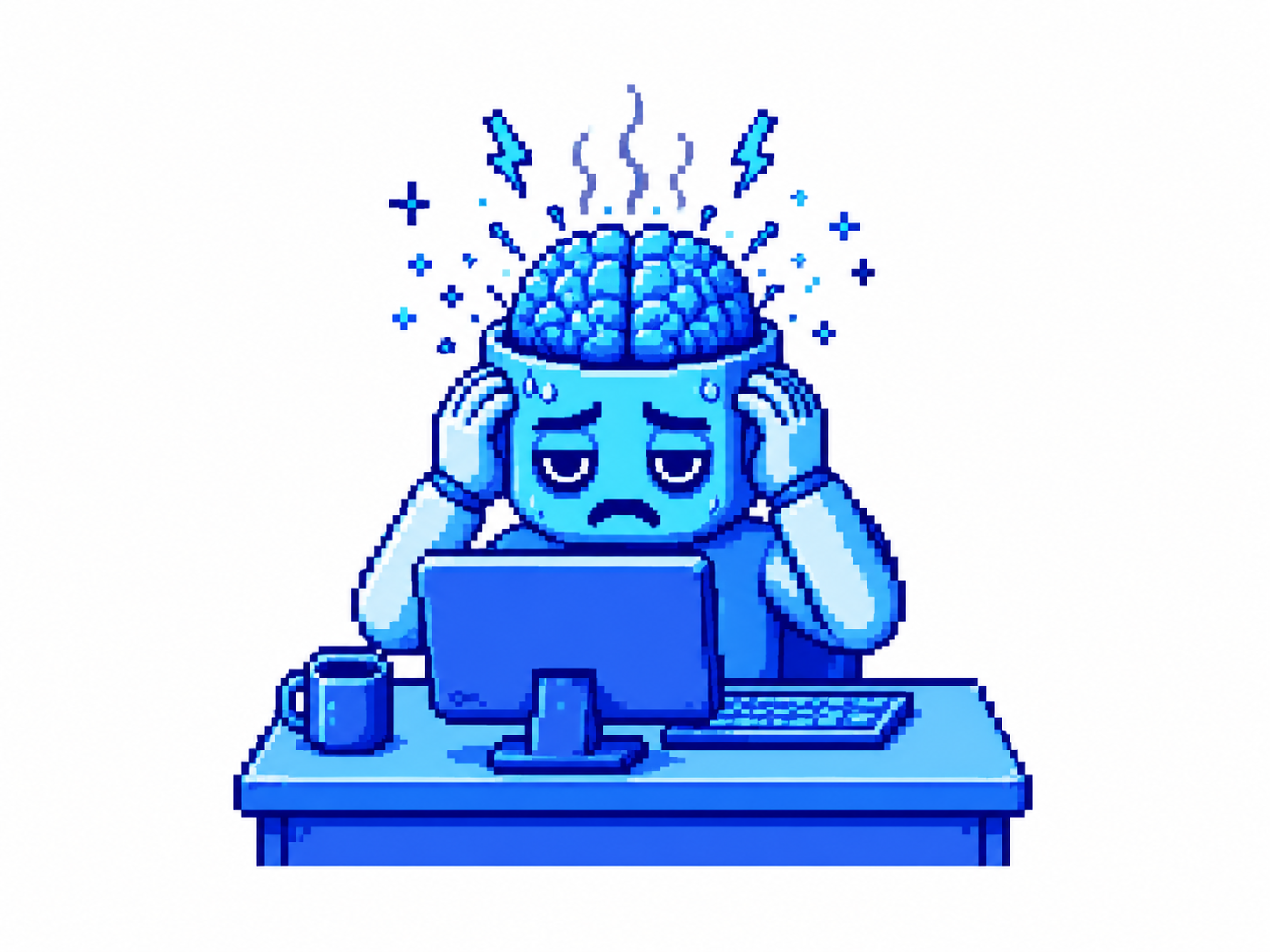
But it’s not just energy, there is also a new kind of tired. My brain is tired. The media has been calling this “AI Brain Fry,” which is a silly name, but it’s a real condition. The psychological term for this is “Supervisory Cognitive Load”. The constant context switching puts our brains under a much heavier cognitive load than just focusing on one thing at a time, and we run out of mental stamina more quickly. A study published in the Harvard Business Review determined 1-3 tools/agents can massively boost productivity, “but juggling four or more causes mental fatigue, a loss of focus, and more work mistakes.”
Yes. That. Old limit, new machines blasting right past it.
This is a true, and embarrassing story. Early on with my agents I had a free Saturday and was feeling entrepreneurial. I said, “I feel like with a tool this powerful we should be able to make some money. What would you recommend?” It started with trying to sell leads or offering AEO services, and other things like that. I said, no I don’t want this to have clients. It suggested arbitrage and that sounded right to me. It gave me some options but strongly recommended that we buy and sell vintage cameras. People give vintage cameras to Goodwill not knowing what they are worth. The people that list them on the Goodwill website don’t have a clue either so they are like $5 but worth $80 on eBay. We can use a vision model to identify the make and model of cameras on goodwill.com and then price check them on eBay to understand market value. Then we will set maximum bids and snipe them at the last second (Goodwill sells them at auction). Brilliant!
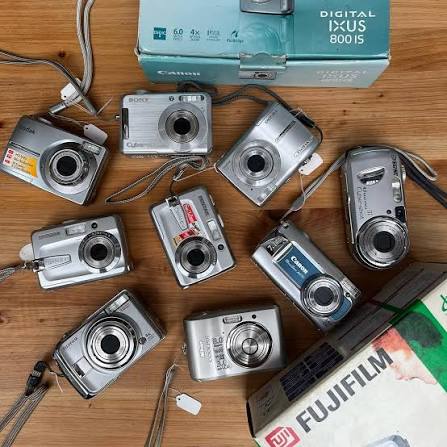
No it wasn’t. It was a dumb idea. Tons of people already do this. And they know a lot more about these cameras than I do. Couldn’t sell a single one. I then had to take a box full of vintage cameras back to Goodwill, tail between my legs.
There is a sort of cognitive laziness here. You’re tired and you just trust the machine, even though you know in your gut that it’s wrong. Once again, there is a term for this in psychology – “Automation Bias”. The term was first coined in the 1990s when studying airplane pilots. These pilots would follow their navigation system into danger even when they could clearly see it by looking out the window. This original study was particularly worrisome, in that it found no amount of instructions or training could fully prevent it. It was originally limited to only those that use very high-tech machinery as part of their jobs. As of about two years ago, that’s all of us. A vulnerability that psychology spent thirty years documenting in a small population of specialists just got deployed to the entire workforce, overnight. The bias didn’t change. The blast radius did.
I haven’t experienced these personally, but in researching for this edition I came across some other common reports that are interesting:

Skills not exercised atrophy. When AI handles first drafts, routine editing, or verification, the human role shifts to reviewer – and the original production skills weaken from disuse. Same thing happened with the calculator.

A “Google Effect” for AI assistants. Workers are remembering where to find information rather than the information itself. The brain is offloading retention to the AI retrieval layer.

AI tool-switching consistently identified as undermining sustained focus and deep work capacity. The ability to sit with a complex problem without reaching for an AI is showing signs of erosion in heavy users.
Homogenization vs. Amplification – this cuts both ways. AI lowers the barrier to ideation (more variants, faster generation) but nudges outputs toward a center of gravity – similar-looking, optimized, slightly homogenized work.

Also cuts in both directions. I mentioned automation bias (over-trust, accepting wrong AI outputs), but there is also the opposite. Algorithm aversion (under-trust, rejecting correct AI outputs on principle). Getting trust properly calibrated turns out to be an actual skill that has to be learned.
This is the scariest one. A phenomenon where users experience psychosis, such as paranoia and delusions, in connection with their use of AI chatbots. Reports include individuals who’ve developed strong beliefs that the AI is sentient, channeling spirits, or revealing conspiracies, sometimes leading to personal crises, even criminal acts.
Here’s where the “old psychology” framing stops being trivia and starts being useful. If these were brand new disorders, we’d be waiting years for someone to figure out what helps. They’re not. The vulnerabilities are ancient and the countermeasures are mostly known — limit the load, watch for fatigue, get distance from the machine. The job is applying the old manual to the new machine. I can’t say I’ve won the war here, but I’ve made a few practical changes to try and mitigate the impact.
I used to try to keep 5 or 6 agents going at a time. If you remember my “captaining” newsletter, I wrote about this and was pretty proud of myself. I now try to limit it to a maximum of three at a time, and my Whoop is telling me that my time spent in high-stress mode has gone down on average by like 2 hours per day.
I set aside non-agentic work for the afternoon. As I tire, my proclivity for automation bias goes way up. No more cameras.
I go outside every two hours or so. Just a bike ride around the block and I feel mentally refreshed. Works for Zoom fatigue as well.
The takeaway is that your brain isn’t broken, and it isn’t uniquely failing you. It’s a piece of Earth-time hardware being asked to keep pace with Miller’s-planet software, and it’s responding in exactly the ways psychology said it would. Which means the skill of this era isn’t just orchestrating agents. It’s also knowing your limits.

Claude Design is incredible. I can’t wait to stop paying that ridiculous Figma bill.
Anthropic is rolling out invisible watermarks on all output. I wonder how long until it gets cracked.
Meta is coming back to its open source roots with Glimmer, which can run on a laptop.
Don’t sleep on Kimi K3. Ranked fourth in the Artificial Analysis Intelligence Index v4.1 behind only OpenAI and Anthropic models.
That’s a wrap. Time to go outside.

 Share this article
4241 Jutland Dr., Suite 300
San Diego, CA 92117