Happy summer everyone. I’m in Virginia Beach and today I picked up my boat from dry storage. This marks the beginning of summer for me. On the cruise home we saw dolphins jumping and playing in the Chesapeake Bay. This is a family tradition akin to Punxsutawney Phil poking his head out and not seeing his shadow. Seeing dolphins means that it’s going to be a great summer. As I floated there, phone stowed safely below deck and miles of water on all sides, I had this visceral, uniquely human experience. And that’s appropriate, because today’s edition is not really about the technology. It’s about the humans.
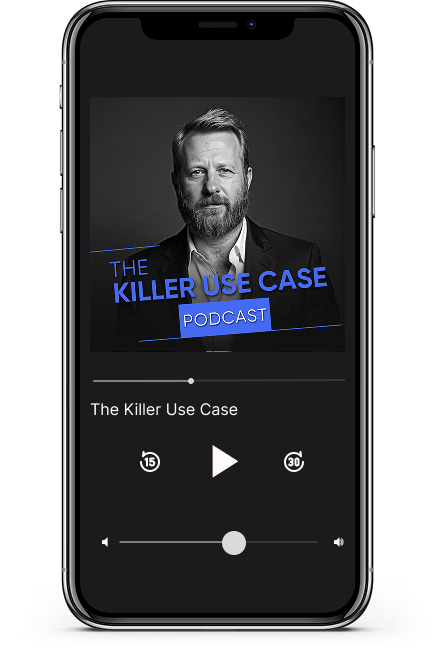
It’s an odd juxtaposition, because today was also the official launch of my new book: The Killer Use Case. The book outlines how businesses are adopting AI, and also features a corresponding podcast where I talk with business leaders about how they’re integrating AI into their processes. But they are not so different are they? What is the purpose of technology if not to uplift humanity?
In this edition, I want to share some of the things I’ve learned after hosting my first 13 podcasts. What I like about this format is it’s not a well-prepared speech, or some humble brag on LinkedIn. It’s just the real, practical, and often messy implications of the intersection between technology and people in business. There are some through-lines, quotable quotes and truly unique ideas. Then I will shamelessly beg you to buy my book, so brace yourself.
My guests on the podcast were, in no particular order:
I think it’s fair to call it a diverse crowd. And yet the same themes popped up again and again, independently, and without me leading the witness. Here are a few that stood out.
In 100% of the episodes, user adoption came up as one of the biggest struggles. Largely, the tech works but getting the people to use it remains the hardest nut to crack.
Minyang Jiang (MJ), the Chief Strategy Officer at Credibly (a FinTech lending platform), learned this the hard way. Her team spent nearly a year trying to automate their underwriting process with AI – and failed. Not because the tech couldn’t do it, but because they framed it as a cost-cutting play. The moment leadership started talking about AI in terms of efficiency and headcount reduction, the innovative ideas dried up and employees started quietly sabotaging adoption.
Her reframe was clever – a simple thought exercise for leaders. What if you were to take whatever you’re about to announce about AI, and imagine swapping AI with the term “deficit of trust.” So “We’re going to use AI to cut costs and be more efficient” becomes “We’re going to use a deficit of trust to cut costs and be more efficient.” Hear how that sounds to the person on the receiving end? That’s what your employees are actually hearing.
Greg Moser, who runs ShipCalm (a warehouse and fulfillment operation with hundreds of employees), took a completely different approach. He built an AI coworker named Marvin – but instead of making it a private, one-on-one chatbot, he made it social by nature. Marvin lives in group Slack threads, email chains, and video conferences. When a sophisticated user prompts Marvin in front of their colleagues, everyone sees the result in real time. Peer influence does the adoption work for you. His take on the urgency? “The next decade in business is going to be defined by adoption and the rate of adoption. Period. Full stop.”
Stephen Arthur, the Director of AI at ECPI University, found that 90% of students won’t use optional AI tools – even ones that are genuinely helpful. His solution? Don’t make it optional. Embed it into the required workflow. He replaced traditional essay assignments with AI-guided conversations where students get real-time, sentence-by-sentence feedback. Can’t fake it with paste-and-submit.
The lesson here is important: if you bought your team a bunch of AI licenses and adoption is low, the problem likely isn’t the tool. It’s how you framed it.
In 11/13 of the podcasts, the war on authenticity came up in one form or another. AI-generated content is flooding every channel, and it’s aggressively mediocre. A regression to the mean.
Mike Montague, who runs an AI-first marketing agency called Avenue 9, had a great metaphor about OJ: “If you create something that’s really strong and powerful, when AI waters it down, you still get great stuff for your audience. If you start with weak thinking or a weak idea first, when it waters it down, you just get slop.” He calls it the “concentrated orange juice” approach. Start with genuinely original, deeply human thinking. Then let AI compress, adapt, and distribute it. Don’t start with AI and hope it produces something worth reading. It won’t.
Laurent Cohen, the CEO of GetOblic (a voice AI platform), was even more blunt: “AI is simply a tool. It’s regularly delivering average to mediocre results. And the only thing that you can achieve is adding the human layer on it to push the envelope.” He went further with his prediction that, as AI gets better at producing “perfect” content, humans will actually start preferring AI with deliberate flaws. Because we’re wired to look for authenticity, and too-perfect content triggers our uncanny valley instinct. The future of AI isn’t perfection – it’s learning how to be imperfect in the right ways.
Scott Turman, who runs BrightRay Publishing, is so anti-slop that he runs every manuscript through GPTZero before accepting it. Over 15% AI-detected? Back to the author. His policy is clear: “Writing is an art. You can use AI to find errors in grammar and turn of phrases, but you cannot use LLMs to generate the actual human connection, the actual base content.” The broader observation, “Authenticity is the thing that shines through all of that. Slop is scaled. Real is not scaled at all.”
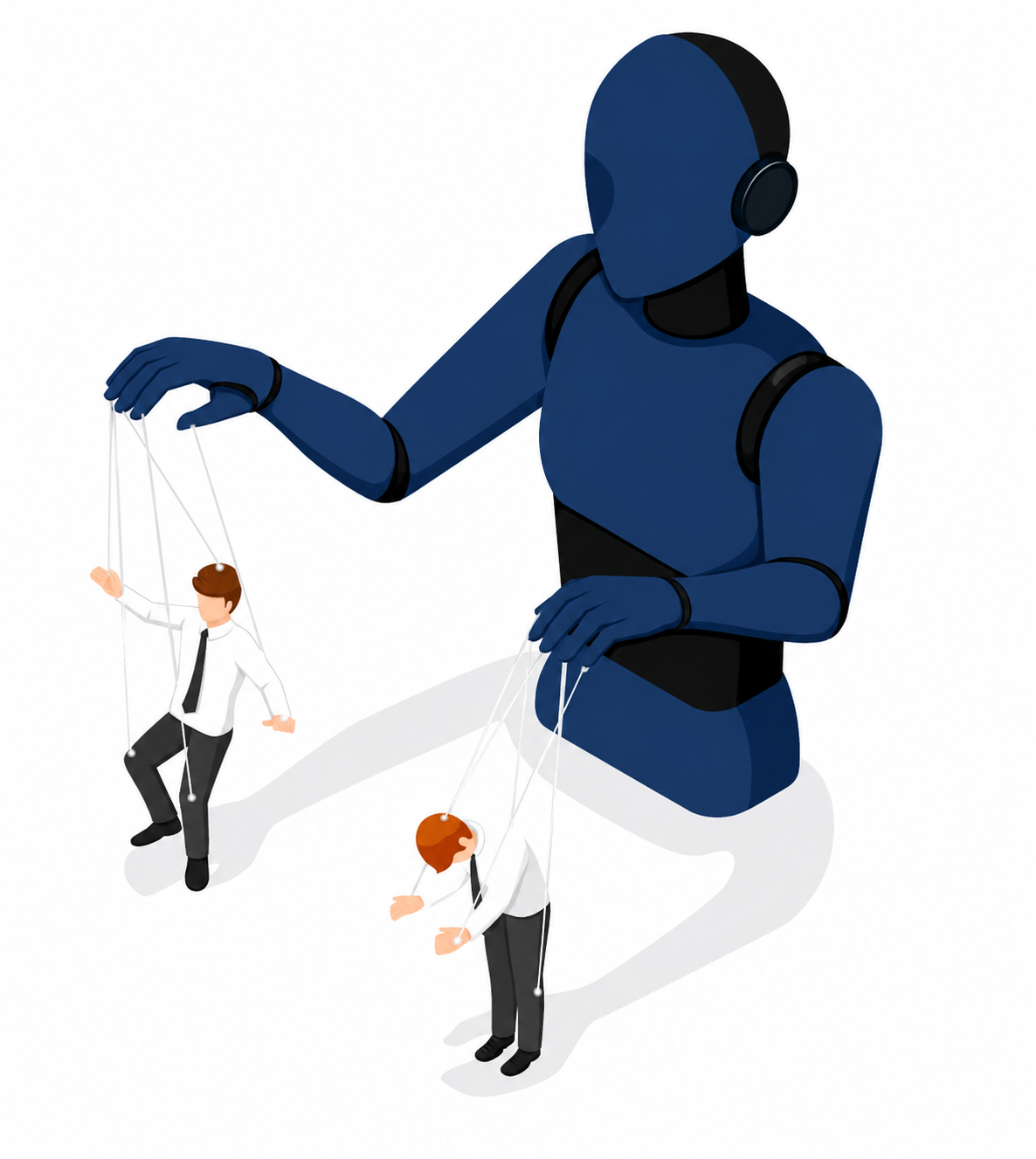
I’m only going to touch on this briefly, because I’m writing my next newsletter about this very topic. But it came up several times that there’s a mental impact from dealing with AI agents all day that has some similar properties to sitting at a slot machine and just pumping in quarters (tokens?!). You send an agent on a long run and check back in an hour later. Red X’s. Darn – let’s try again. An hour later, green checkmarks! There’s that delicious dopamine.
Greg Moser admitted he stays up until 4am because “I feel guilty if I don’t keep my agents busy.” Scott Turman described waking up at 4am with an overwhelming need to get to his computer: “AI brain is real.” Laurent Cohen highlighted the gap between your productivity with agents versus without them is so extreme that normal work starts to feel impossibly slow and frustrating. More on this in the next edition.
One more thread I want to pull on, because it came up in at least four separate conversations.
If AI does the entry-level work, where do senior professionals come from in 10 years?
Martin Hills, who built an AI-powered knowledge platform called Infin8y, put it starkly: “We’re gonna miss out on all of these junior developers making mistakes that actually turns them into amazing developers.”
Greg Grand, a fractional CRO with 35 years in sales, flagged the exact same dynamic in his field: junior sales roles are getting hollowed out, and there’s no clear path from entry-level to consultative seller if AI handles all the BDR work.
This isn’t just a tech problem. It’s a talent pipeline problem that’s going to hit every industry with knowledge workers. I haven’t heard a good answer to this yet.
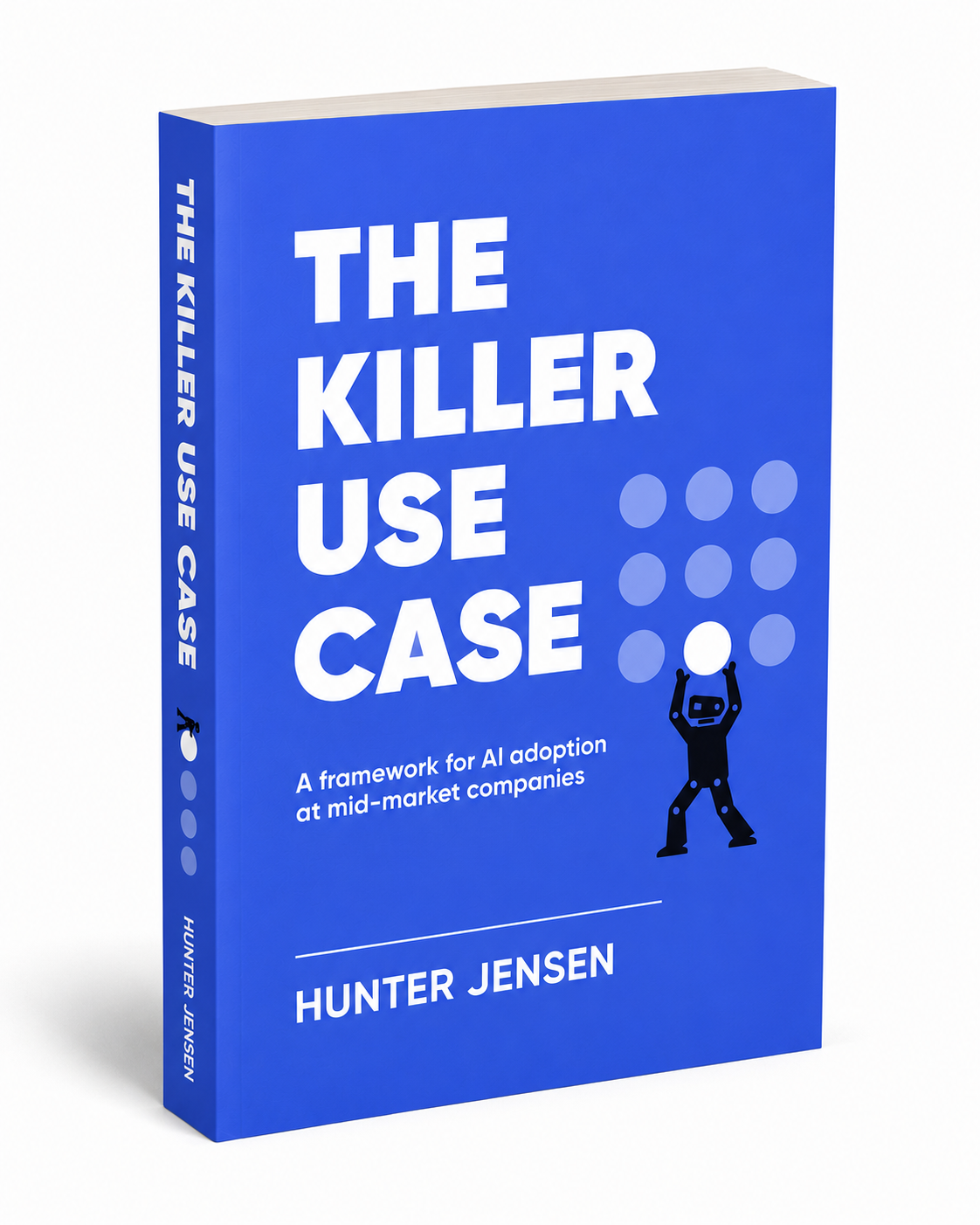
It’s called The Killer Use Case: A Framework for AI Adoption at Mid-Market Companies, and it’s out today. I believe the title speaks for itself. You can grab it here – https://www.amazon.com/Killer-Use-Case-Framework-Mid-Market/dp/1956464808/
If you’re feeling generous, you could buy it, wait 3 days so the algorithms know it’s real, then give me an authentic review. As long as it’s authentically good. But please don’t give me a bad review. I don’t have the self-esteem to handle something like that.

Now it’s time to head back out on the water. Don’t worry though – while I’m sailing my agents will be whirring away. And if that’s not uplifting humanity, then I don’t know what is.
Cheers!

Hunter Jensen
Barefoot Solutions, CEO
 Share this article
4241 Jutland Dr., Suite 300
San Diego, CA 92117